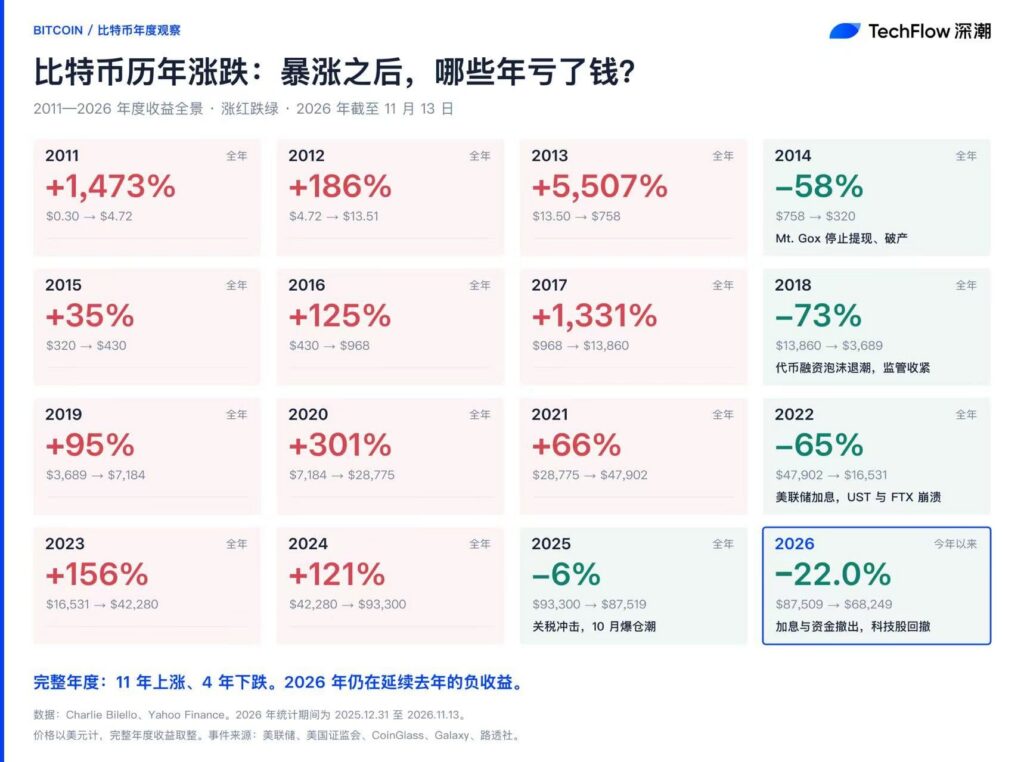
As reported on November 16, 2026, Bitcoin was down 22.0% for the year through November 13, falling from $87,509 to $68,249, according to figures compiled by TechFlow. That was a year-to-date reading, not a full-year result.
TechFlow’s figures show that Bitcoin rose in 11 of the 15 complete years from 2011 through 2025 and fell in four: 2014 (−58%), 2018 (−73%), 2022 (−65%) and 2025 (−6%). It associated those declines, respectively, with Mt. Gox halting withdrawals and going bankrupt; the retreat of a token-fundraising bubble and tighter regulation; Federal Reserve rate increases alongside the collapses of UST and FTX; and tariff shocks alongside a wave of liquidations in October 2025.
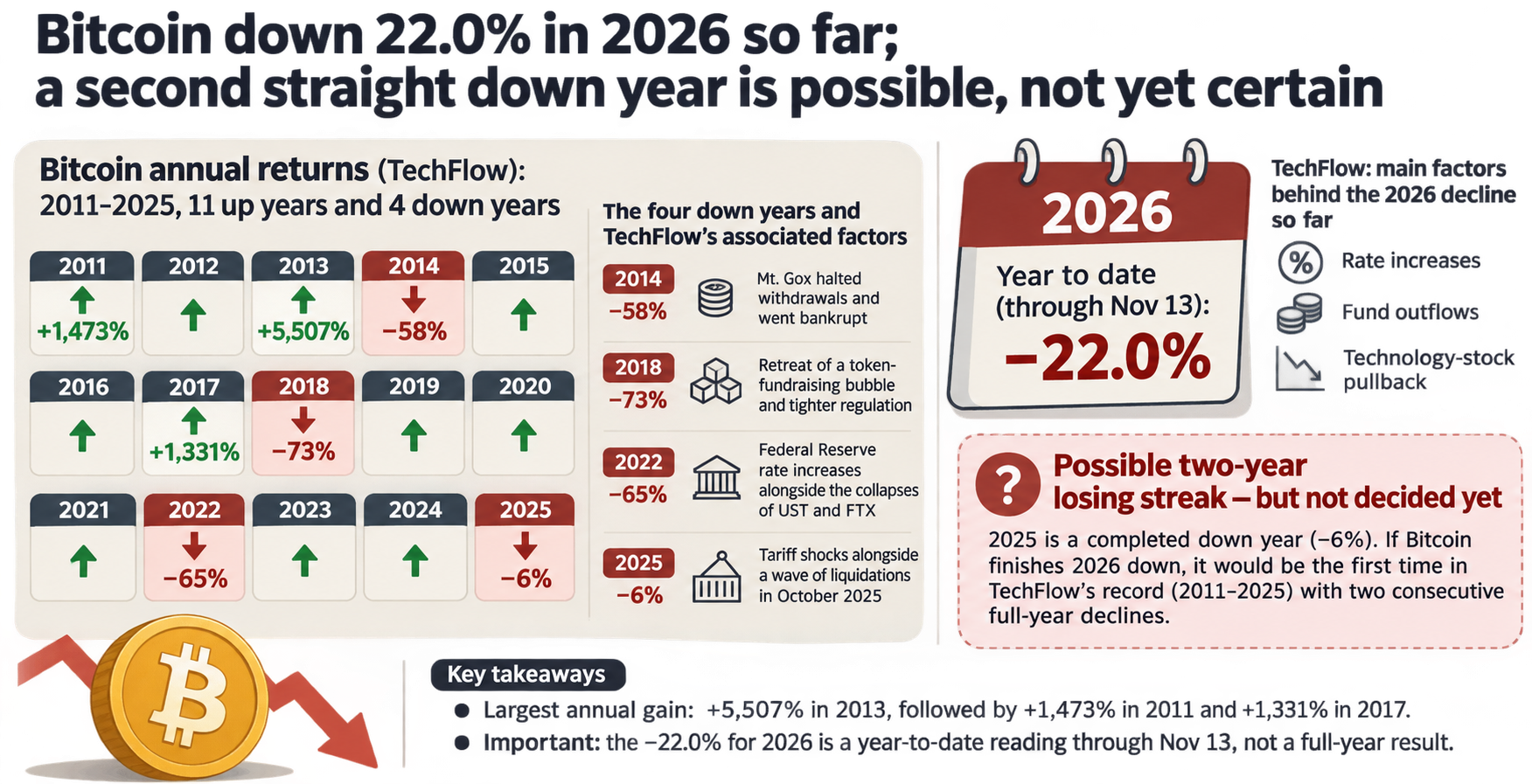
The same figures show how wide the annual swings have been: Bitcoin’s largest gain was 5,507% in 2013, followed by 1,473% in 2011 and 1,331% in 2017. TechFlow attributed the 2026 decline through November 13 mainly to rate increases, fund outflows and a technology-stock pullback.
The distinction is between a year-to-date loss and a completed year. If Bitcoin finished 2026 down, TechFlow’s record would show its first two consecutive full-year declines. The November 13 figure alone cannot establish that outcome.