As of November 18, 2026, bitcoin had fallen 14% over the preceding week after six consecutive weekly losses. K33 said it had seen such a streak only twice before: from January 26 to March 1, 2026, and from April 3 to May 29, 2022. Bitcoin was trading near $64,000 that Wednesday, down 1.1% over 24 hours.
The question is whether the strain signals a local bottom—or only a pause in the decline.
Why K33 sees a possible bottom
K33 Head of Research Vetle Lunde said bitcoin’s daily relative strength index, a measure of recent price momentum, had reached 19.95 on Saturday and remained below 25 since Friday. Bitcoin had also fallen below its 200-week moving average after its worst weekly return since June 7. At one point, it traded about 8.5% below that average, compared with 7.3% at June’s $58,500 low.
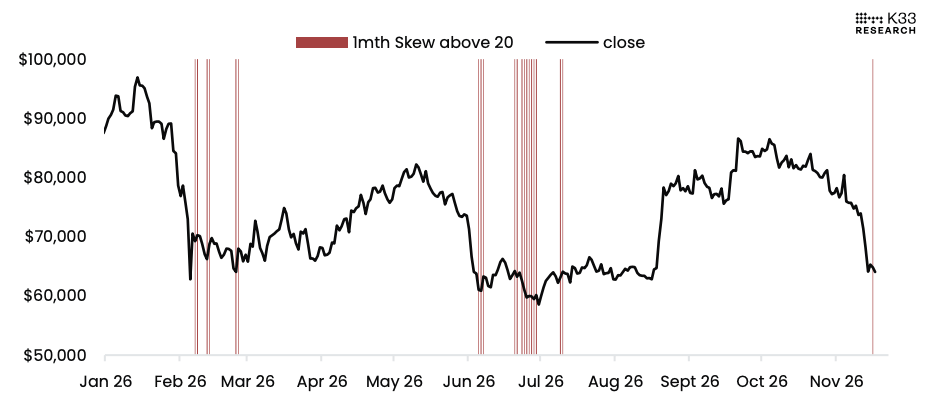
Lunde said 51.5% of circulating bitcoin was held at a loss. K33 also pointed to negative funding rates, leveraged ETF exposure at multi-year lows, and strong demand for options protection against further declines. The one-month 25-delta skew rose above 20 for the first time since July—a level Lunde said has historically coincided with selling exhaustion near local bottoms.
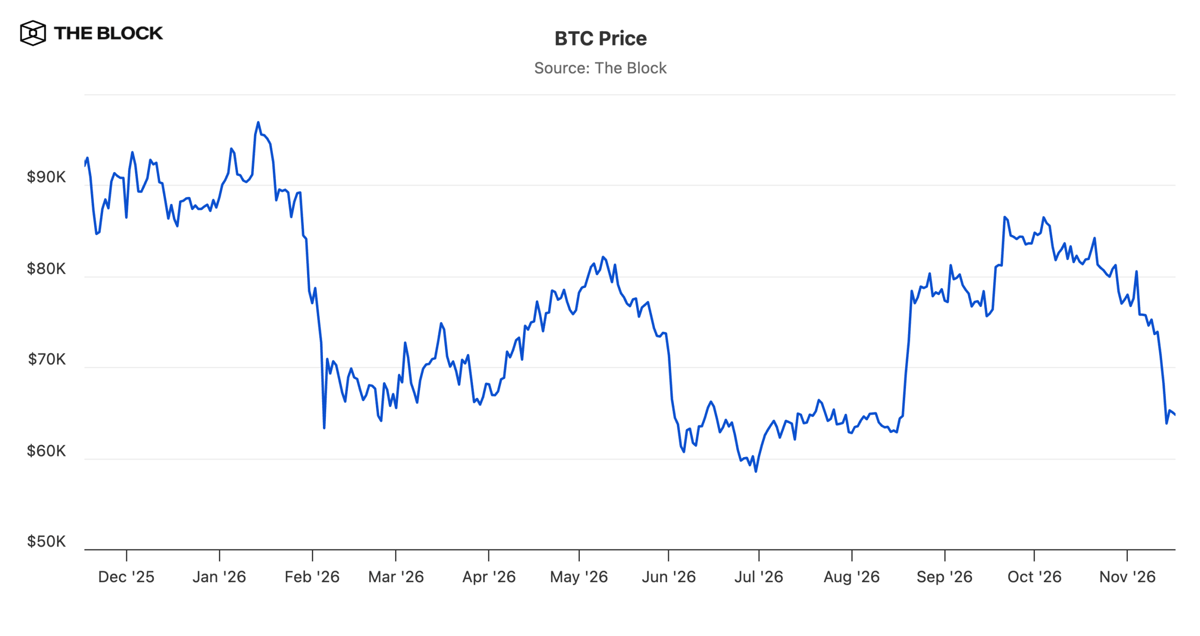
Lunde called prices below $70,000 an attractive opportunity for medium- to long-term investors. That is his assessment, not confirmation that a bottom is in. He also noted that recoveries from similar conditions have involved prolonged consolidation rather than an immediate rebound.
What could challenge that view?
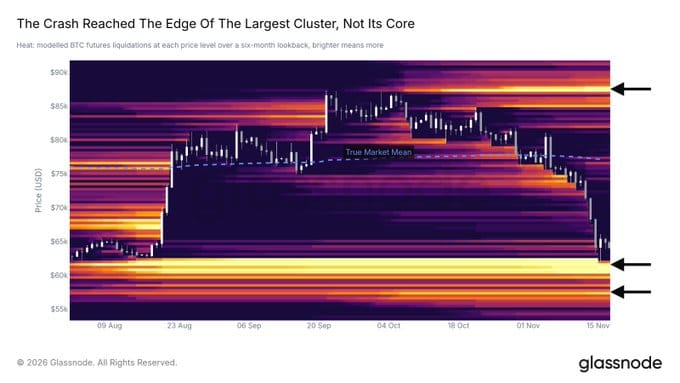
Glassnode said bitcoin touched $62,000 on Sunday as investors realized losses on a scale last seen near the lows of 2022 and early 2023. Short-term holders added about 66,000 BTC in the $62,000–$66,000 range during the two heaviest selling days.
Glassnode identified a daily close below $62,000 as a risk: it would put August buyers at a loss, with a large cluster of long liquidations beneath. Its next levels to watch were June’s low near $58,500 and the $53,700 realized price—the average price at which circulating bitcoin last moved onchain. Buy orders were concentrated near $60,000 on Binance, but Glassnode cautioned that traders can withdraw them.
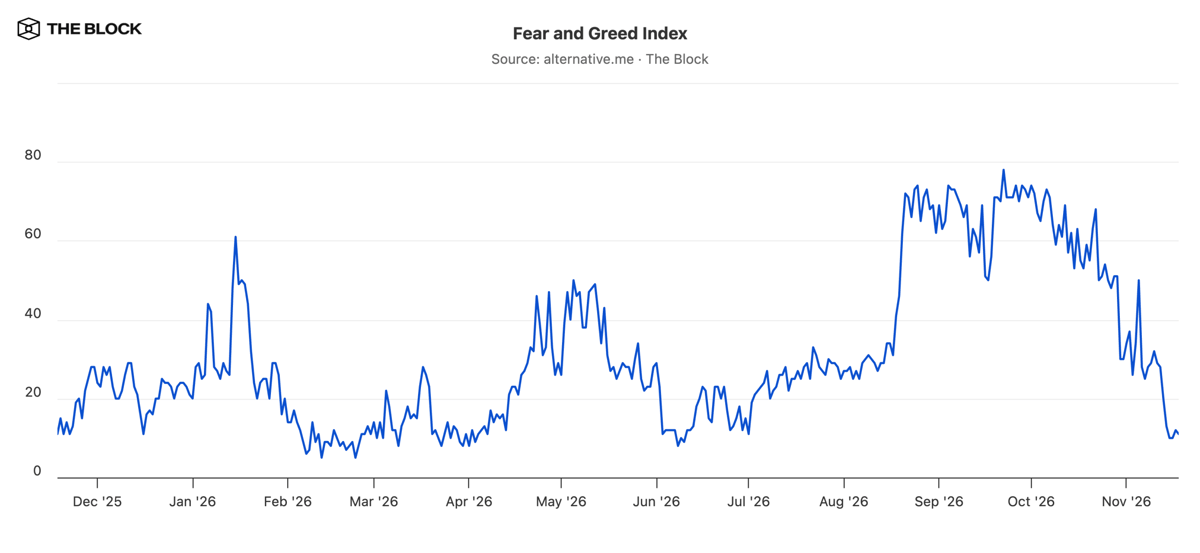
Bitwise Chief Investment Officer Matt Hougan offered a separate explanation for the selloff. He attributed it to a shift in Federal Reserve rate expectations after a November 10 report showed October U.S. consumer prices rising 0.4%, more than expected. Hougan said traders moved from assigning a 66% probability to a December quarter-point rate hike to treating one as certain; he said thin weekend trading amplified the drop as roughly $2 billion in leveraged positions were liquidated.
These measures describe a market under pressure. They can help explain why some analysts see the possibility of a local bottom, but they cannot establish when a recovery will begin—or whether the June low will hold.