
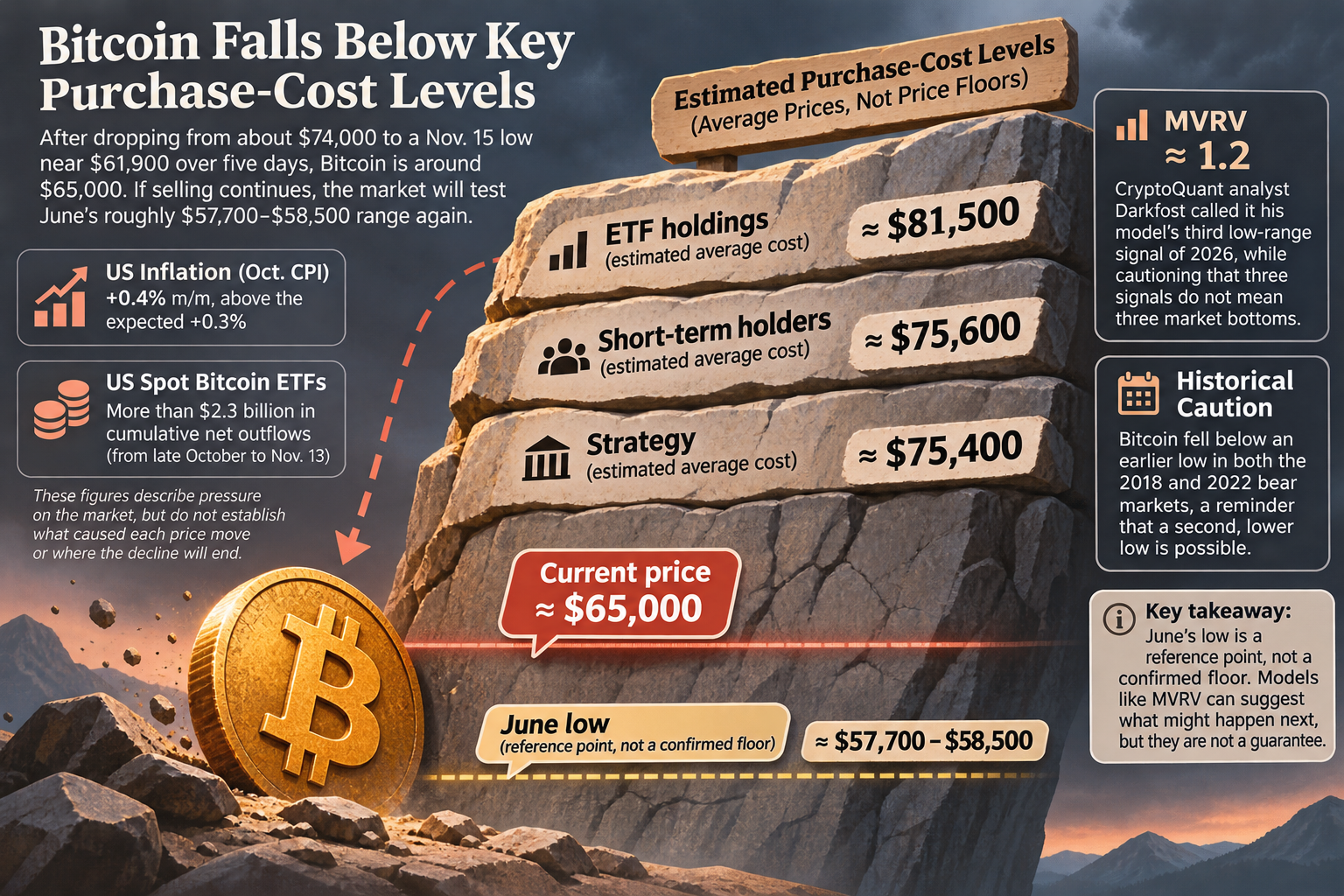
Bitcoin’s drop in mid-November put its June low back in view. In reporting published on November 18, 2026, the price was described as falling from about $74,000 to a November 15 low near $61,900 over five days. It was around $65,000 at the time of writing. The question is whether June’s roughly $57,700–$58,500 range will hold if selling continues.
The article links the decline partly to an October US inflation reading released on November 10: headline CPI rose 0.4% month over month, above an expected 0.3%. It also reports more than $2.3 billion in cumulative net outflows from US spot Bitcoin ETFs between late October and November 13. Those figures describe pressure on the market, but they do not establish what caused each price move or where the decline will end.
What does the cost basis show?
The price had fallen below several estimated average purchase prices cited in the report, including roughly $81,500 for ETF holdings, $75,600 for short-term holders and $75,400 for Strategy. These are estimates of where groups bought, not price floors. A holder being underwater does not, by itself, mean they will sell.
The report also puts Bitcoin’s market-value-to-realized-value ratio, or MVRV, near 1.2. This compares market value with a measure based on the prices at which coins last moved on-chain. CryptoQuant analyst Darkfost called it his model’s third low-range signal of 2026, while cautioning that three signals do not mean three market bottoms.
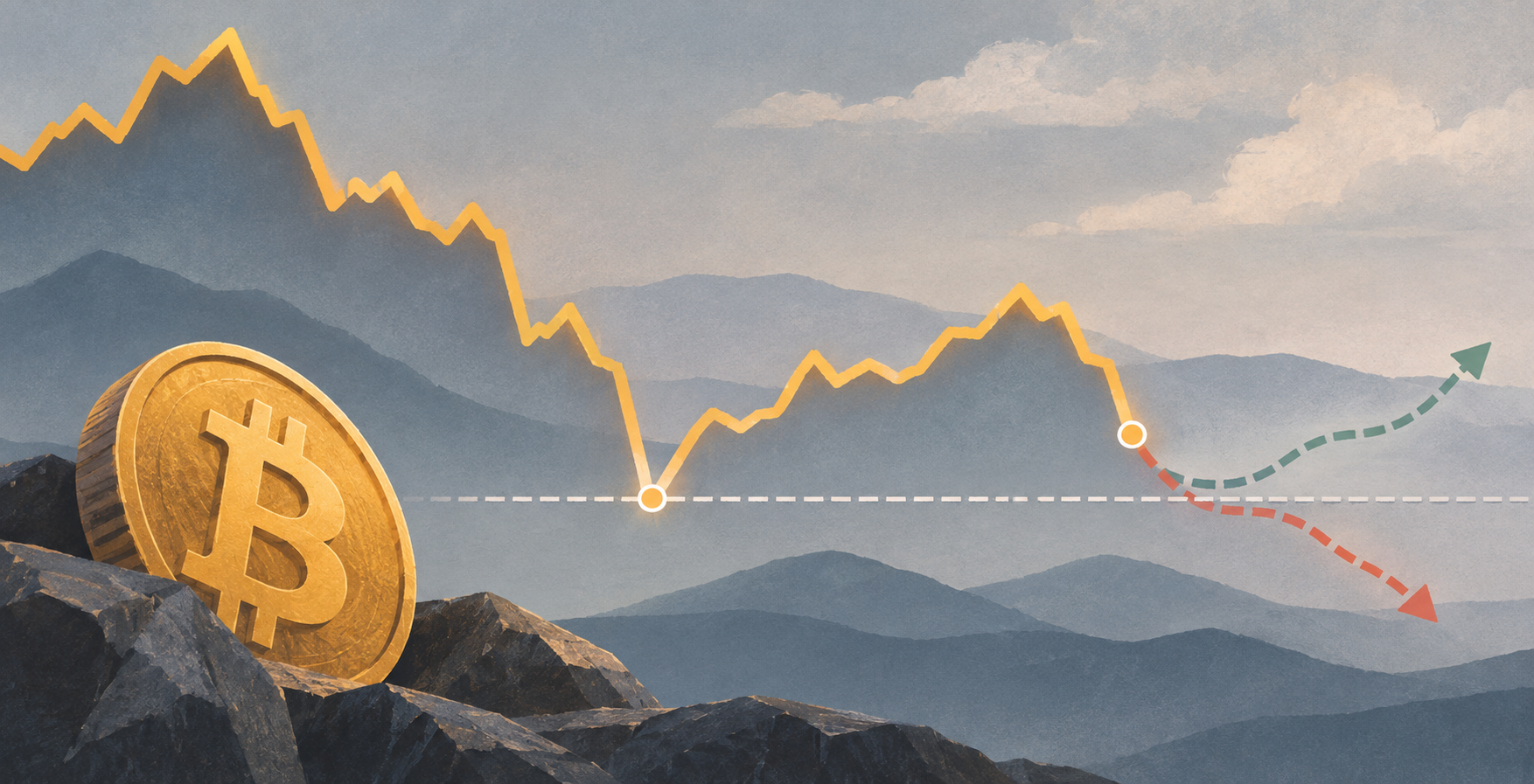
Past declines leave room for caution. The article notes that Bitcoin fell below an earlier low in both the 2018 and 2022 bear markets. Galaxy researcher Alex Thorn’s framework looks for an MVRV below 1 and a price below realized price; neither condition had been met in the figures cited here. Thorn also noted that this cycle’s peak MVRV was lower than in earlier cycles, so the same depth of decline may not be necessary.
June’s low is therefore a reference point, not a confirmed floor. The useful distinction is between a level the market has already tested and a model that can only suggest what might happen next.