Bitcoin had fallen back toward $62,000 when Odaily reported on November 19, 2026. The question for the market was not simply whether that price would hold. It was whether investors would have to price in more U.S. interest-rate increases than they had expected.
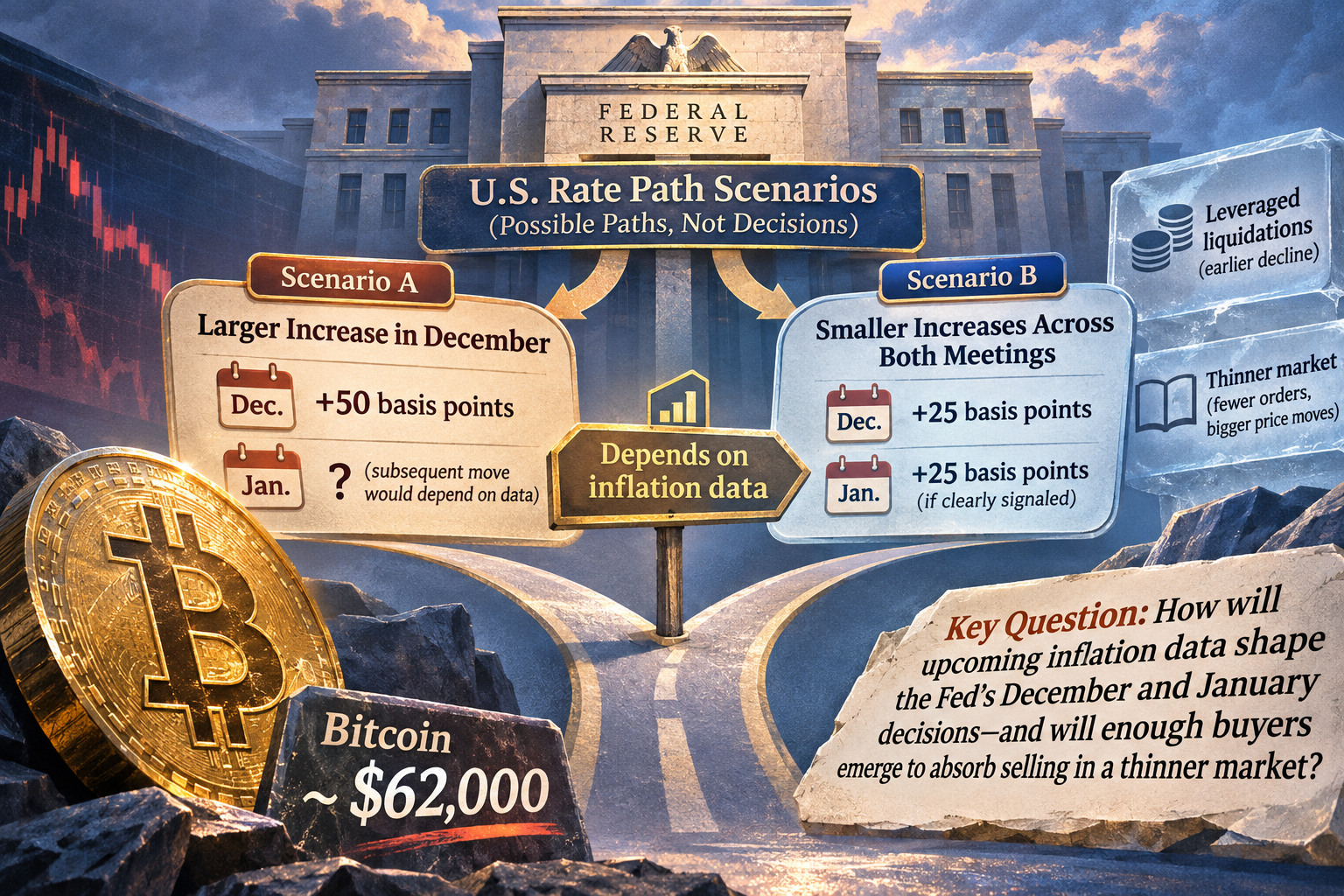
Federal Reserve Governor Christopher Waller said inflation was moving in the wrong direction and favored a 50-basis-point increase in December. He said a 25-basis-point increase could also work if the Fed clearly signaled another 25 basis points in January. Those were possible paths, not decisions.
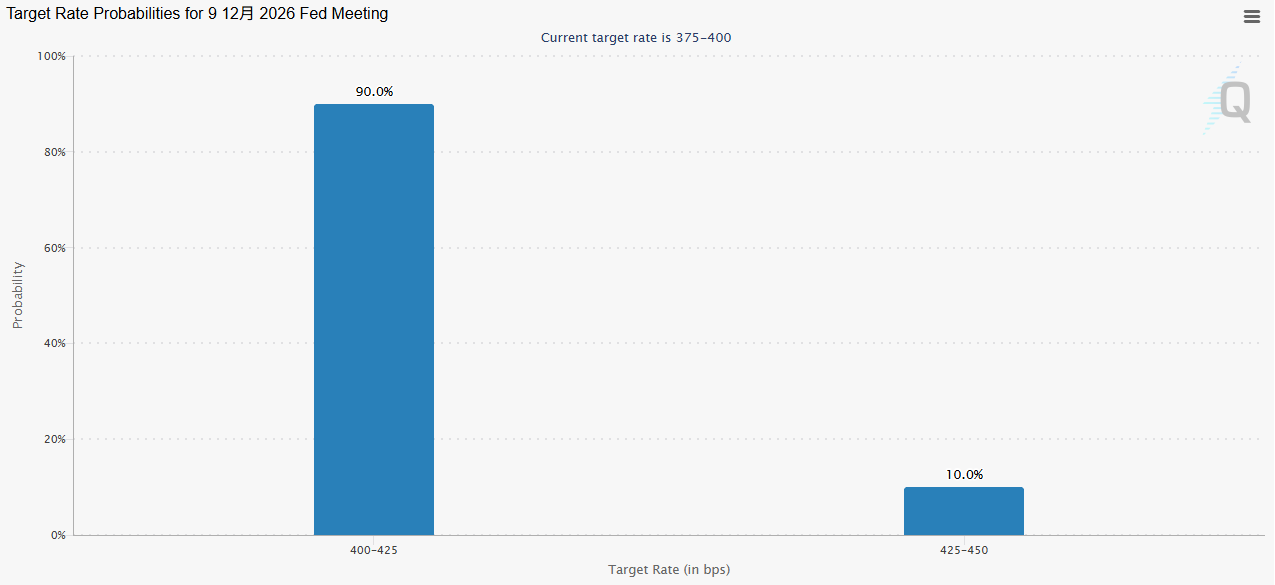
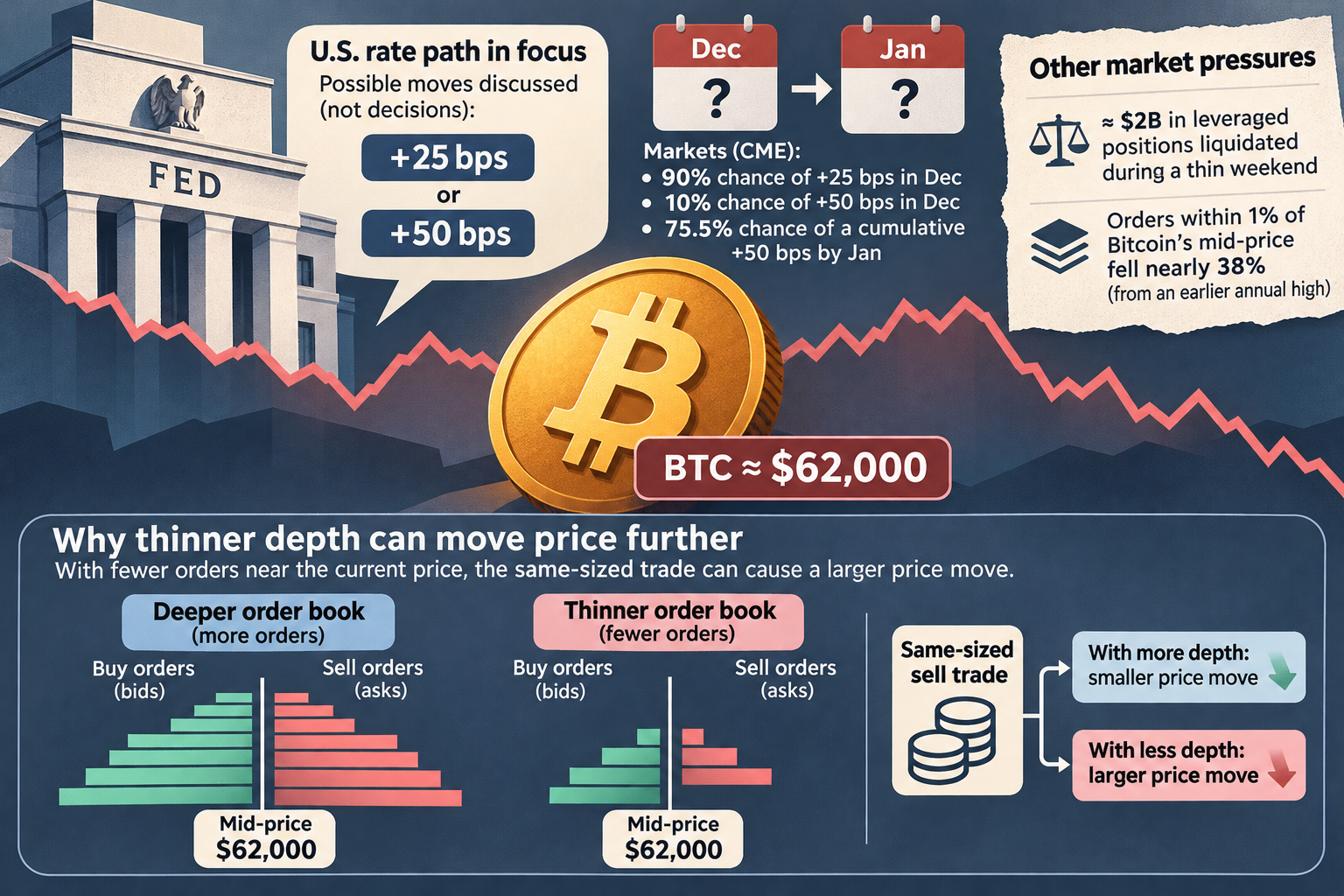
Minutes of the Fed’s October meeting showed disagreement over the pace of increases. Rates had been held at 3.75%–4.00%, though two officials dissented in favor of raising them. According to the CME figures cited in the report, markets assigned a 90% probability to a 25-basis-point increase in December and 10% to a 50-basis-point increase. They assigned a 75.5% probability to a cumulative 50-basis-point increase by January. These were market-implied probabilities, not promises from the Fed.
The pressure on Bitcoin was not only about rate expectations. Bitwise chief investment officer Matt Hougan attributed part of an earlier fall toward $62,000 to roughly $2 billion in leveraged positions being liquidated during a thinly traded weekend. Talos data cited by Odaily showed that orders within 1% of Bitcoin’s mid-price had fallen nearly 38% from an earlier annual high before the Binance theft. With fewer orders available, a trade of the same size can move the price further.
Views on a potential floor differed. Fidelity’s Jurrien Timmer said Bitcoin was near a support line in his long-term price model, while acknowledging that a clear break below it would test the model. Veteran trader Peter Brandt instead warned of a possible head-and-shoulders pattern, which would imply greater downside risk if confirmed.
A price level or model cannot settle what happens next. The immediate uncertainty was how inflation data would shape the Fed’s December and January decisions—and whether enough buyers would emerge to absorb selling in a thinner market.