
In reporting published on November 19, 2026, CryptoQuant described bitcoin as being in a bearish phase despite entering what the firm calls a “value zone.” The distinction matters: its valuation measure suggested traders were under pressure, not that a recovery had begun.
Bitcoin was trading around $62,500 at the time of the report, below its 200-day and 365-day moving averages of $72,900 and $75,900. CryptoQuant said it had reached a four-month low of about $61,000 on November 15, erasing the gains from a rally that began August 19.
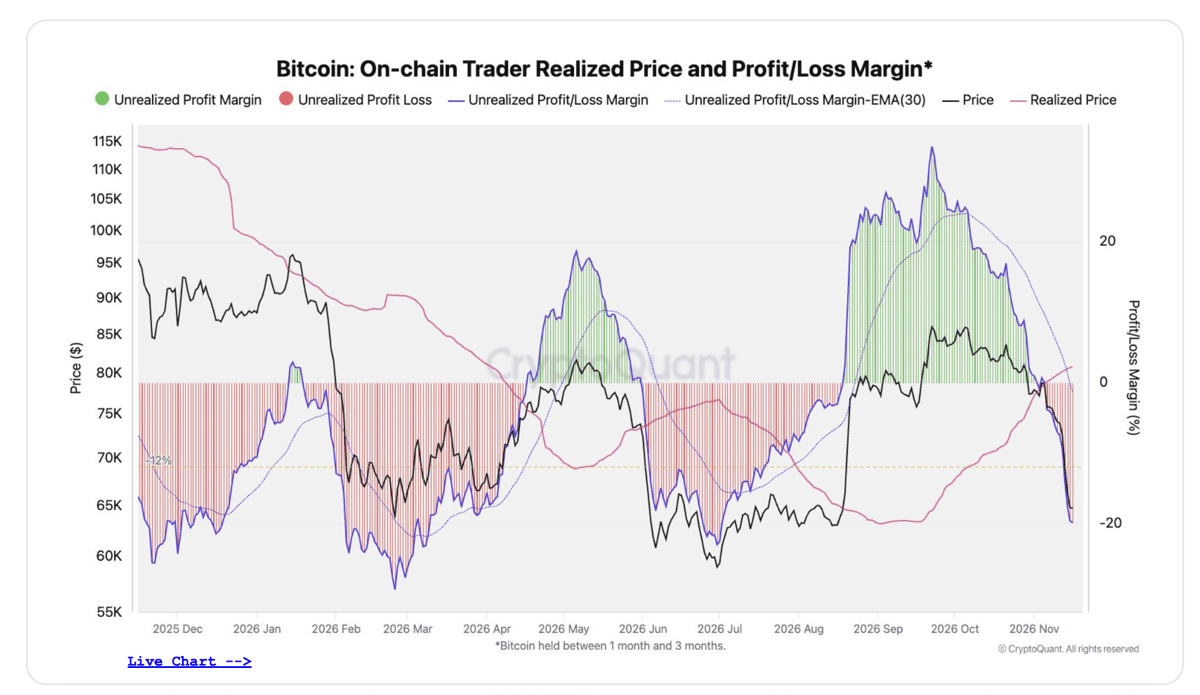
CryptoQuant also said its measure of total bitcoin demand growth, which includes spot and perpetual futures markets, had fallen below −400,000 BTC on a 30-day basis—the weakest reading since the start of July. Julio Moreno, the firm’s head of research, said a durable recovery would require demand growth to stop contracting, preferably through spot buying rather than new leverage.
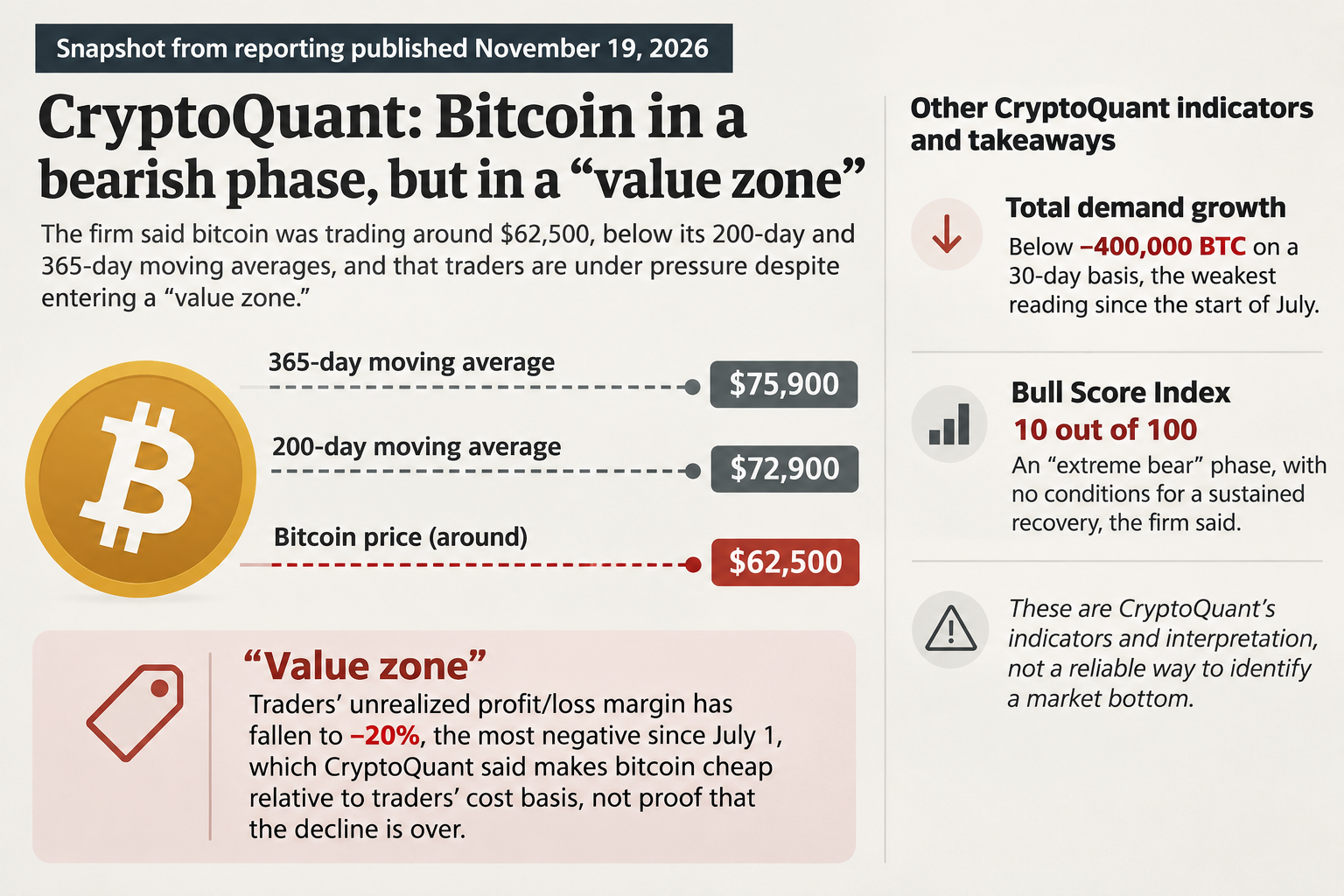
The “value zone” label came from traders’ unrealized profit/loss margin falling to −20%, its most negative reading since July 1. Moreno said that makes bitcoin cheap relative to traders’ cost basis, not proof that the decline is over. CryptoQuant’s Bull Score Index stood at 10 out of 100; the firm said conditions for a sustained recovery were not yet in place. These are CryptoQuant’s indicators and interpretation, not a reliable way to identify a market bottom.