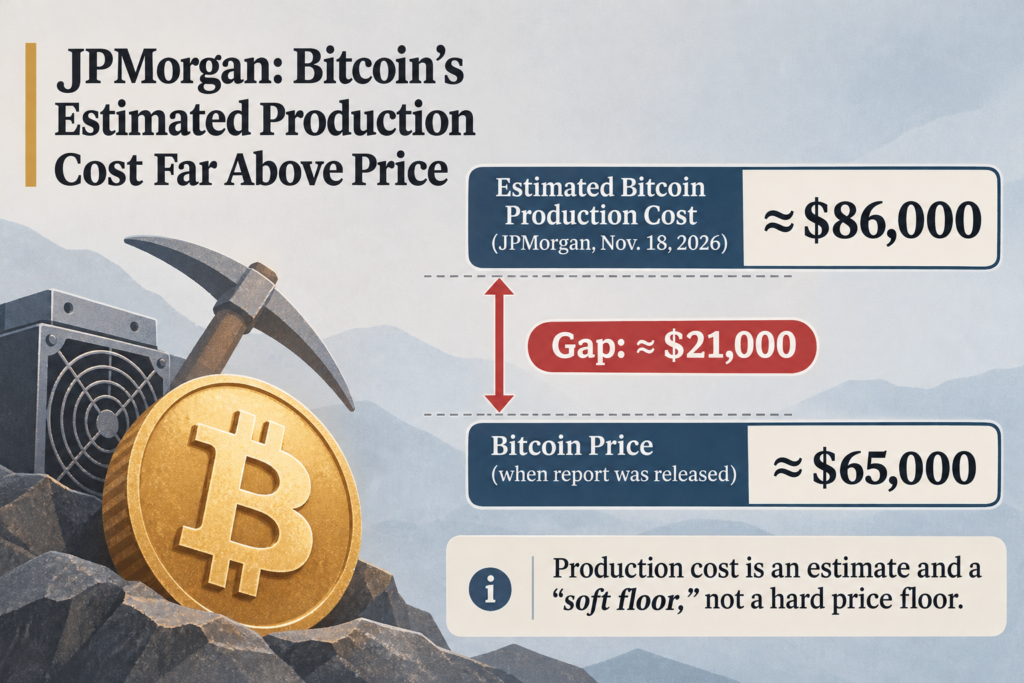
As reported on November 23, 2026, JPMorgan estimated in a November 18 report that the average cost of producing a bitcoin had risen to about $86,000. Its estimates had climbed from $77,000–$78,000 in June to $85,000 in September.
Bitcoin traded at about $65,000 when the report was released—roughly $21,000 below that estimated cost. After the price fell below $60,000 on November 20, the gap widened to more than $26,000. Bitcoin reached a low of $58,300 that Friday.
Why is that gap not a price floor? JPMorgan described production cost as a “soft floor,” not firm support. Higher-cost miners might sell reserves to keep operating or shift toward AI computing. If less efficient machines shut down, falling network computing power could lead to a downward difficulty adjustment. That could narrow the cost–price gap even without a Bitcoin price recovery.
The bank attributed the weak price to retail outflows from crypto ETFs and changing expectations for interest-rate cuts. Its production-cost figure is an estimate, not a guaranteed minimum price or investment advice.