
Originally reported by PANews on November 16, 2026, at 15:57 UTC+8.
How could miners keep running while their mining income was sent elsewhere? In a November 15 security incident, attackers changed pool settings through Luxor’s Commander mining-management software. PANews reported that about 64,000 Bitcoin miners, representing an estimated 13 EH/s of computing power, were redirected without authorization to the OCEAN pool. The payout address was changed to one identified as controlled by the attackers.
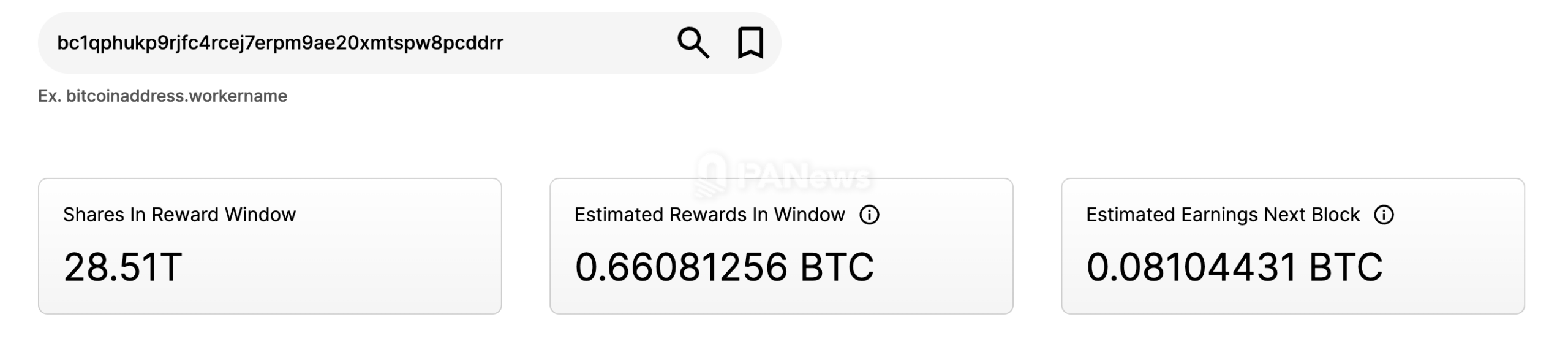
Mining host CoreX Hosting first reported altered settings on its machines and began restoring them. Hours later, it said the attack was largely over: computing power associated with the address had fallen from roughly 13 EH/s to about 100 PH/s. Luxor subsequently confirmed that unauthorized redirection through Commander affected more than ten customer accounts. It said its team patched Commander in about two hours and began returning affected miners to their original pool settings. According to Luxor, there was no data leak, and neither Luxor Pool nor LuxOS was affected.
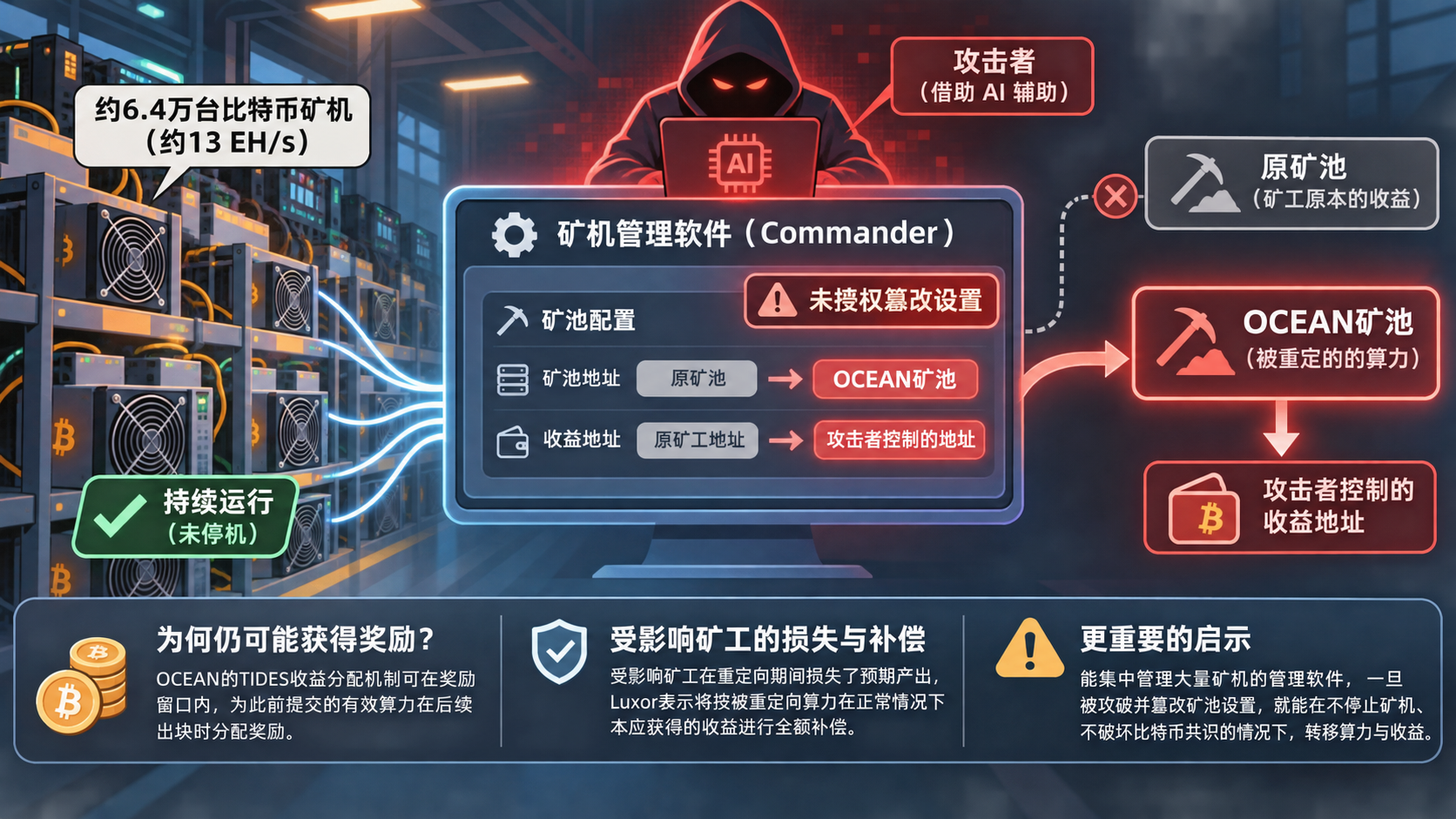
Why a reward remained possible
The attackers did not find a block during the period of redirection. But OCEAN’s TIDES payout system can allocate rewards for valid work submitted within a reward window when later blocks are found. At the time of PANews’s report, OCEAN’s dashboard estimated about 0.66 BTC in rewards associated with the address for the then-current window. It showed two payments totaling about 0.162 BTC, valued in the report at roughly $10,500. Those figures describe the dashboard’s status at the original reporting time, not a final accounting of the attack.
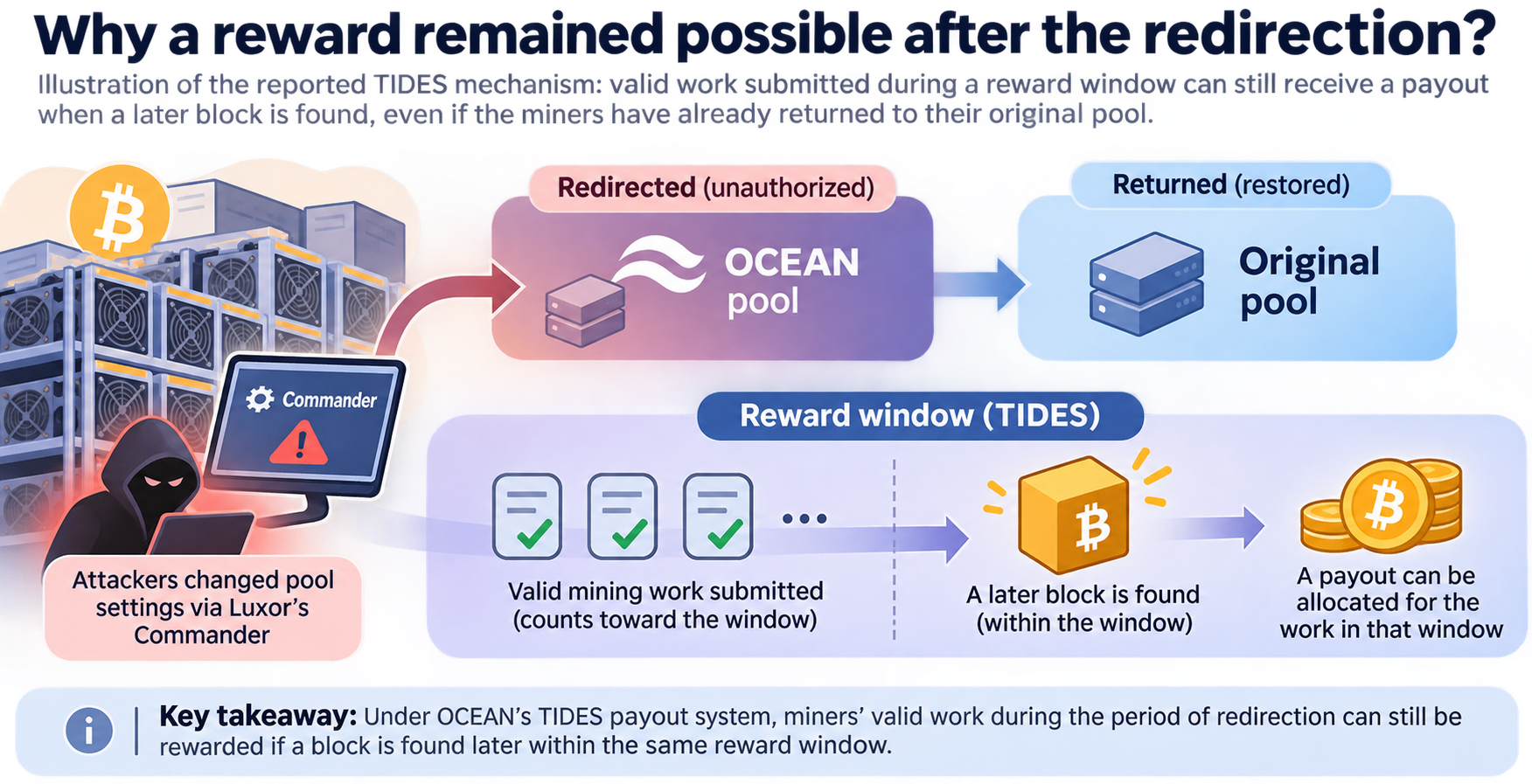
Affected miners lost expected production during the redirection. Luxor said it would fully compensate customers based on what their redirected computing power would normally have earned.
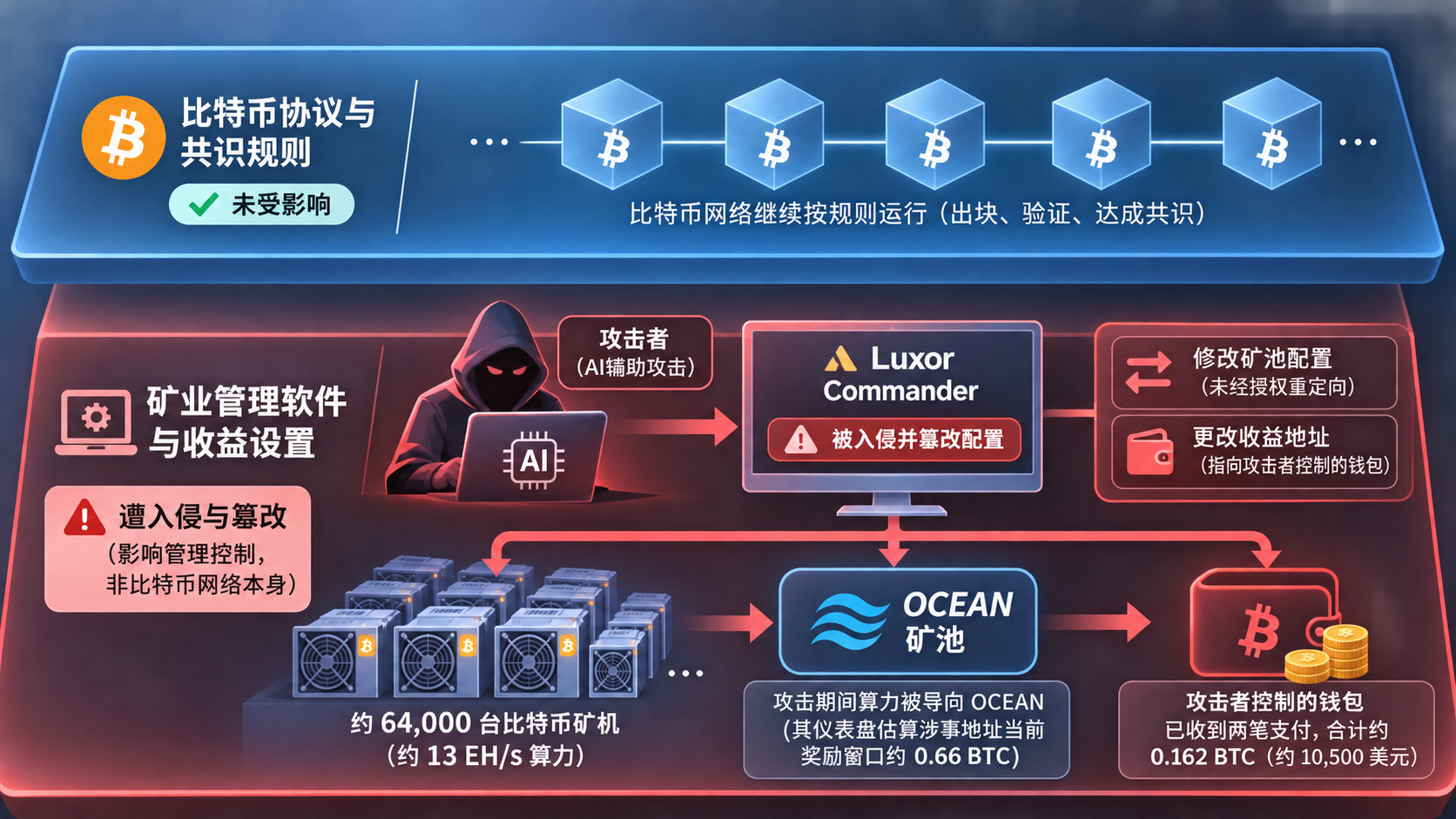
Luxor CEO Nick Hansen described the intrusion as a sophisticated AI-assisted attack. That is his characterization; the reported changes to pool settings do not, by themselves, establish what role AI played. The clearer lesson is about control: software able to change settings across many miners can redirect their work and payouts without stopping the machines or breaking Bitcoin’s consensus rules. Luxor’s compensation pledge addresses customers’ reported losses, but it does not remove that management-system risk.
Source: panewslab.com (originally published 2026-11-16 15:57 UTC+8)