A miner running at about 11.1 terahashes per second (TH/s) found Bitcoin block 977,057 on November 22, 2026. The block carried a reward worth $190,764, according to data from the Bitcoin explorer Mempool. Because the miner used CKpool’s solo service, the reward went to the miner who found the block, less CKpool’s 2% fee.
The 3.129 BTC gross reward had two parts: a 3.125 BTC block subsidy, worth $190,538 at the time, and 0.004 BTC in transaction fees, worth $226. Those transaction fees added to the miner’s reward; CKpool’s service fee came out of it.
What the solo setup changes
In a conventional mining pool, miners combine their computing power and share rewards in proportion to their contributions. CKpool’s solo service provides the infrastructure, so participants need not run their own full node or pool. But each miner works independently and receives no share when another participant finds a block.
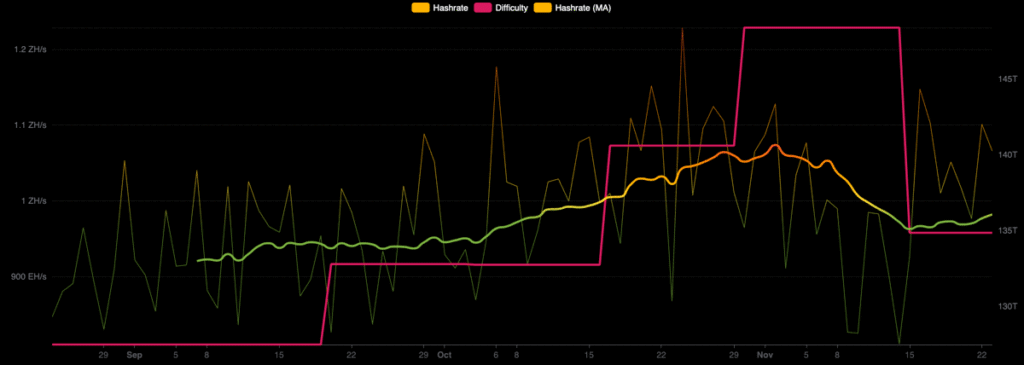
CKpool developer Con Kolivas estimated that a miner of this size had about a 1 in 1,650 chance of finding a block in a year. For scale, Mempool estimated Bitcoin’s total network hashrate at 1.07 zettahashes per second on November 23. The miner’s reported output amounted to about 0.000001% of that total.
The choice is about how rewards arrive: a shared pool offers a small miner steadier, proportional payouts. The solo setup leaves the block reward with its finder, after the service fee, but the much more likely outcome over a year is no payout at all.