As reported on November 18, 2026, Bitcoin investors were realizing losses at a level Glassnode said had previously appeared near the market lows of 2018, 2020, 2022 and early 2023. It was the first such reading since early 2023. The signal is worth understanding, but Glassnode did not call a bottom.
What does the loss signal measure?
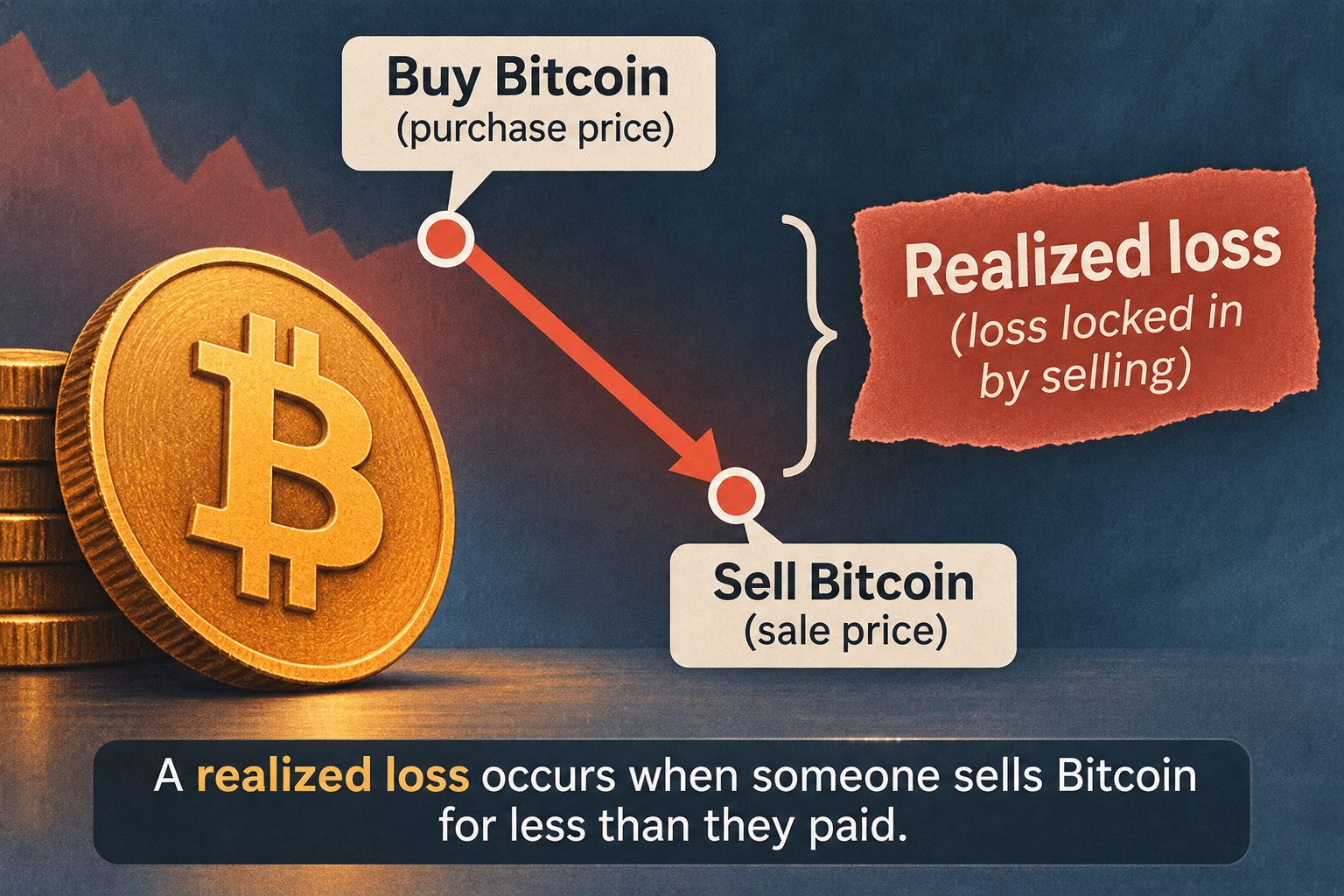
A realized loss occurs when someone sells Bitcoin for less than they paid. In a report published November 17, Glassnode said realized losses had risen relative to profits taken over the preceding year. Much of the selling came from holders whose coins were less than six months old: they took losses into early 2026, realized gains during the rally into September and October, then began selling at a loss again.
The decline also cleared leveraged positions. Glassnode said November 13 and 14 saw some of the largest long liquidations relative to open interest since 2023. Bitcoin fell to about $62,000 on November 15 before rebounding; it traded near $64,970 on November 17. Decrypt reported more than $2 billion in weekend liquidations. The slide came amid fears of further Federal Reserve rate hikes, which can make interest-bearing assets more attractive relative to risk assets such as Bitcoin.
Why wasn’t Glassnode calling a bottom?
Glassnode reported that buyers absorbed about 66,000 BTC between $62,000 and $66,000 during the two heaviest selling days. Resting bids on Binance and Coinbase within 5% of the price outweighed asks by about 2.3 to 1. The Coinbase Premium briefly turned positive near the low, indicating stronger buying on Coinbase than in global markets.
Those signs of support sat alongside weaker evidence for sustained demand. Stablecoin supply had contracted 4.2% over 90 days, the Coinbase Premium had returned to a small discount, and U.S. spot Bitcoin ETFs had recorded eight consecutive sessions of outflows through November 16—about $2.2 billion so far that November, according to Decrypt’s ETF tracker.
Glassnode identified $62,000 to $66,000 as an important range. It said short-term holders had bought few coins below $62,000, while leveraged long positions were clustered around $59,500 to $62,200. In the firm’s assessment, a daily close below $62,000 could lead to a quick move toward the June low of $58,500 and Bitcoin’s $53,700 realized price—the average price at which coins last moved. A move back above short-term holders’ $74,100 average cost basis would, it said, confirm that a bottom was forming.
Those are conditional levels, not a forecast. At the time of the report, Deribit options prices implied roughly a one-in-three chance of Bitcoin settling below $53,700 at the September 2027 expiry. The next Federal Reserve rate decision was scheduled for December 9, 2026, a day before the release of November inflation data. Historical loss-taking may mark stress in the market; it does not, on its own, establish that demand has returned.