Originally published November 16, 2026, at 09:29 (UTC+8). Written by Lithos.eth and translated into Chinese by TechFlow.
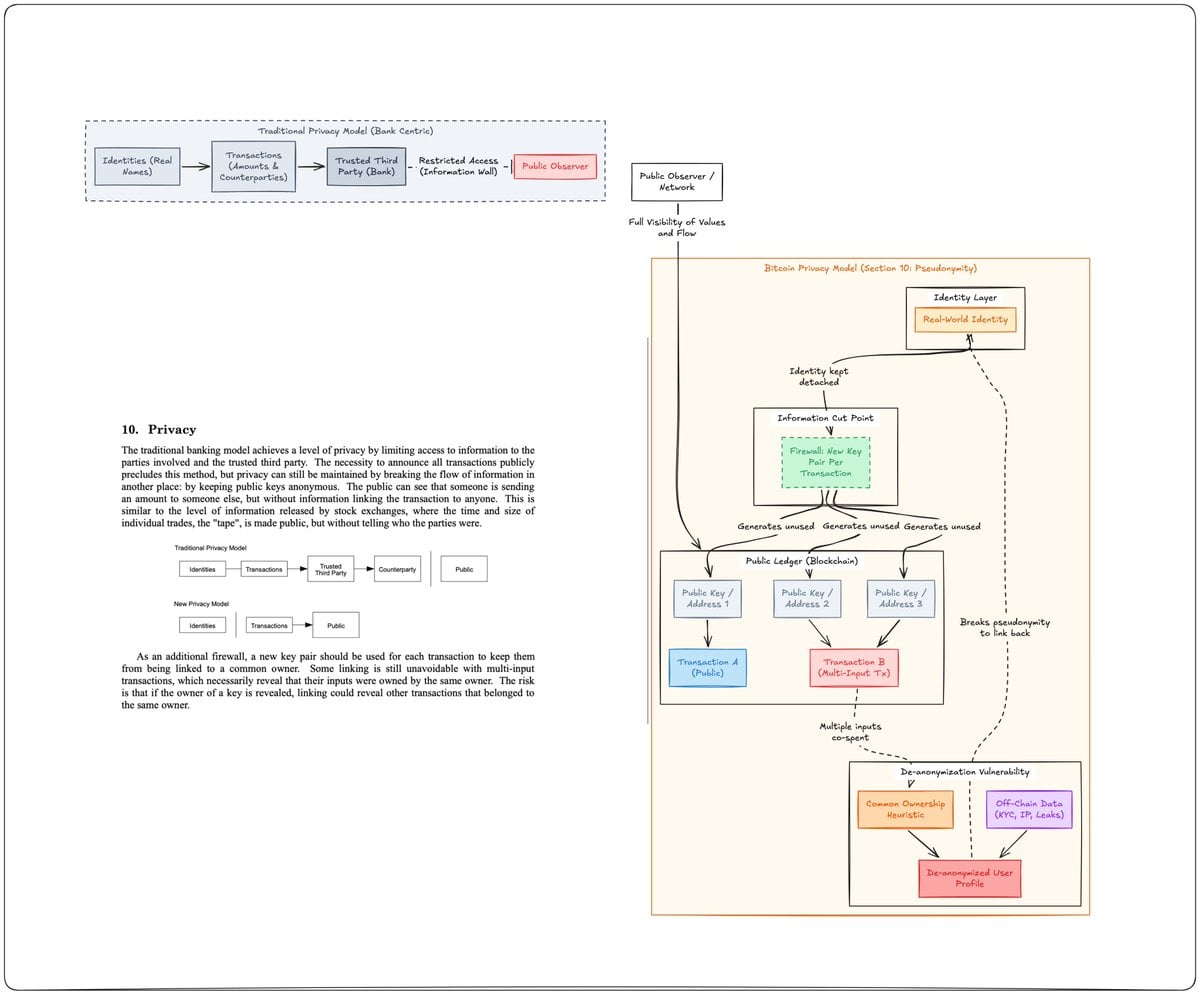
Bitcoin lets people verify payments without asking a bank to maintain the authoritative record. The trade-off is that its ledger is public. Section 10 of Satoshi Nakamoto’s 2008 white paper addresses this directly: transactions must be published, while users’ identities are not written into their public keys. That offers pseudonymity, not confidential payments.
What can an observer see?
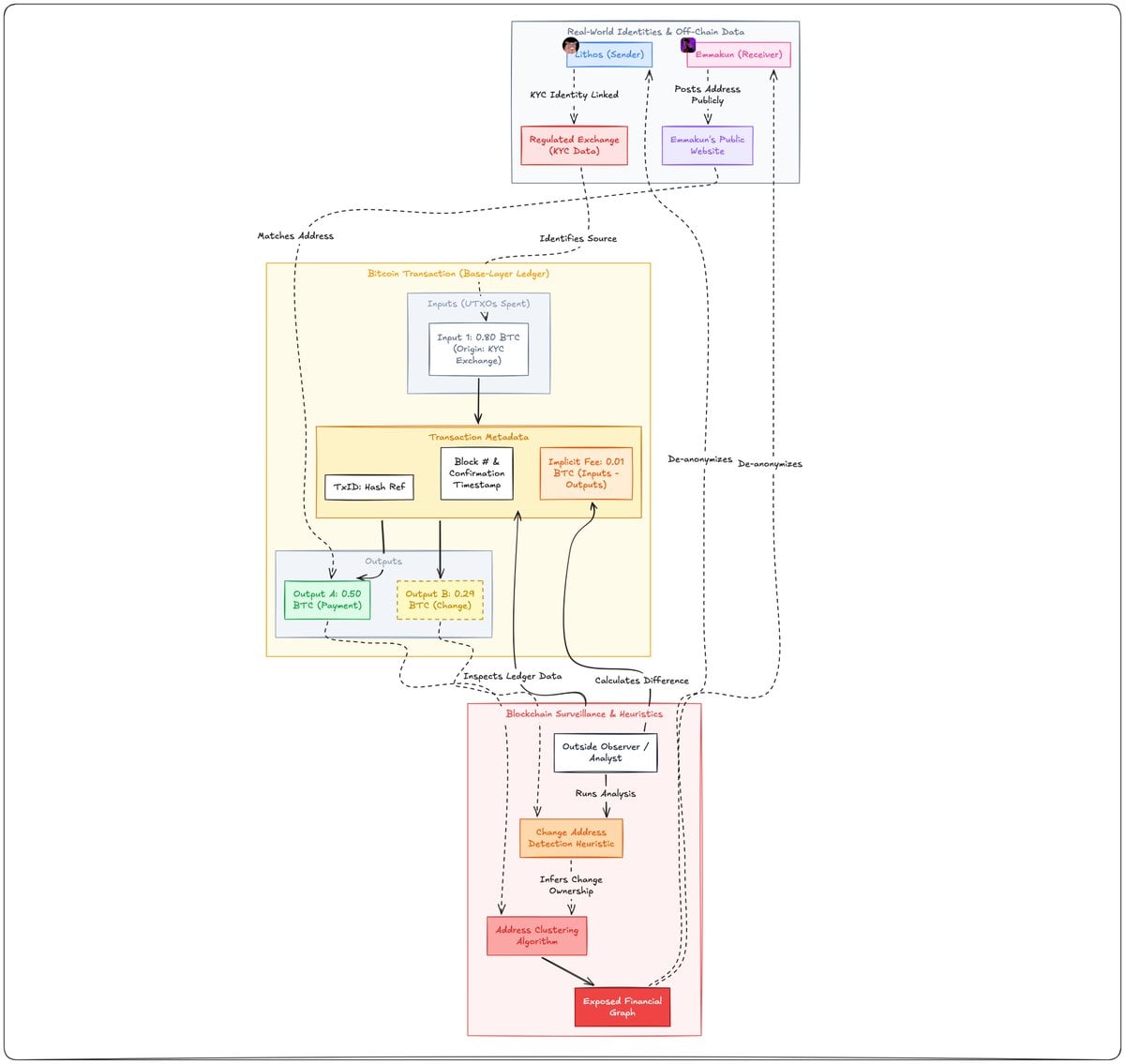
A Bitcoin transaction reveals the inputs it spends, its outputs and their amounts. Its fee can be calculated from the difference between total inputs and outputs, and its confirming block has a height and timestamp. None of this requires an observer to know the people involved.
Consider the source article’s example of a 0.5 BTC payment from Lithos to Emma. If an address is later linked to either person—through an identity-verified exchange or a publicly posted donation address, for example—an analyst may be able to trace related activity. Identifying which output is change can help, but such analysis relies on assumptions that are not always right.
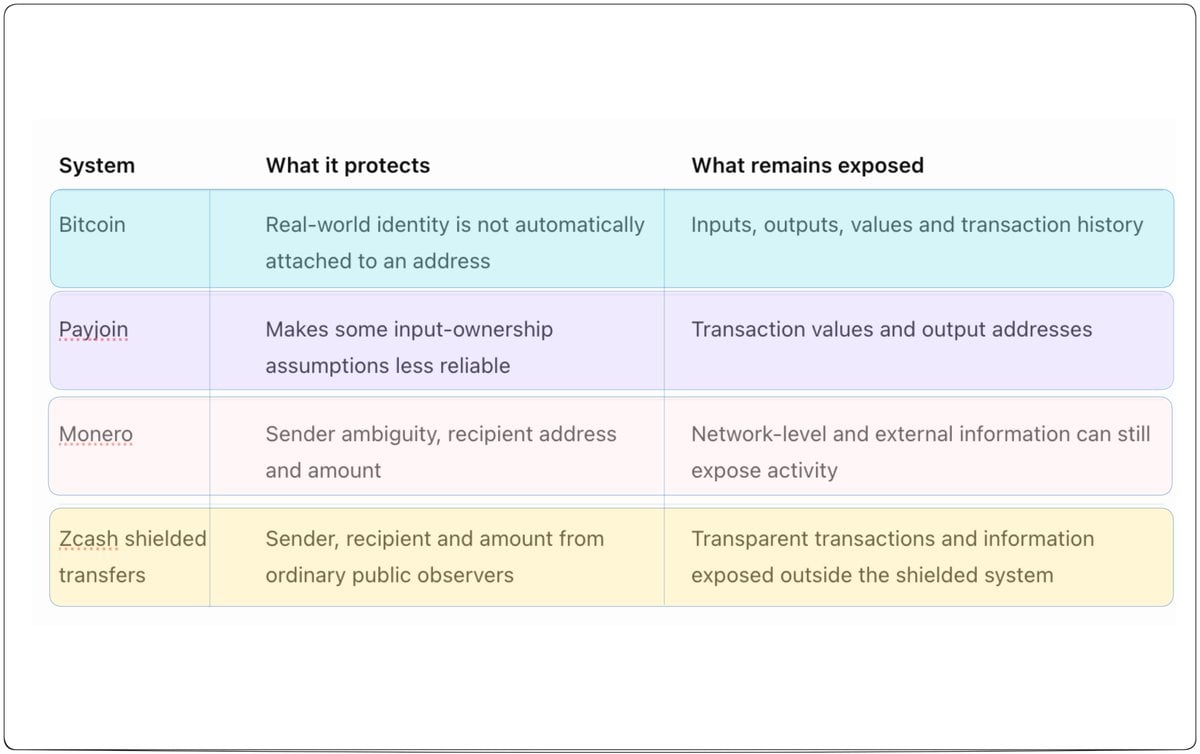
Nakamoto proposed using a new key pair for each transaction to make links harder to draw. He also recognized that spending multiple inputs together can reveal a connection between them. That inference has an important limit: with Payjoin, described in BIP 78, the recipient contributes an input to the payment. An observer can no longer safely assume every input belongs to the payer. Payjoin complicates tracing; it does not hide the transaction’s amounts.
Is a public ledger the only approach?
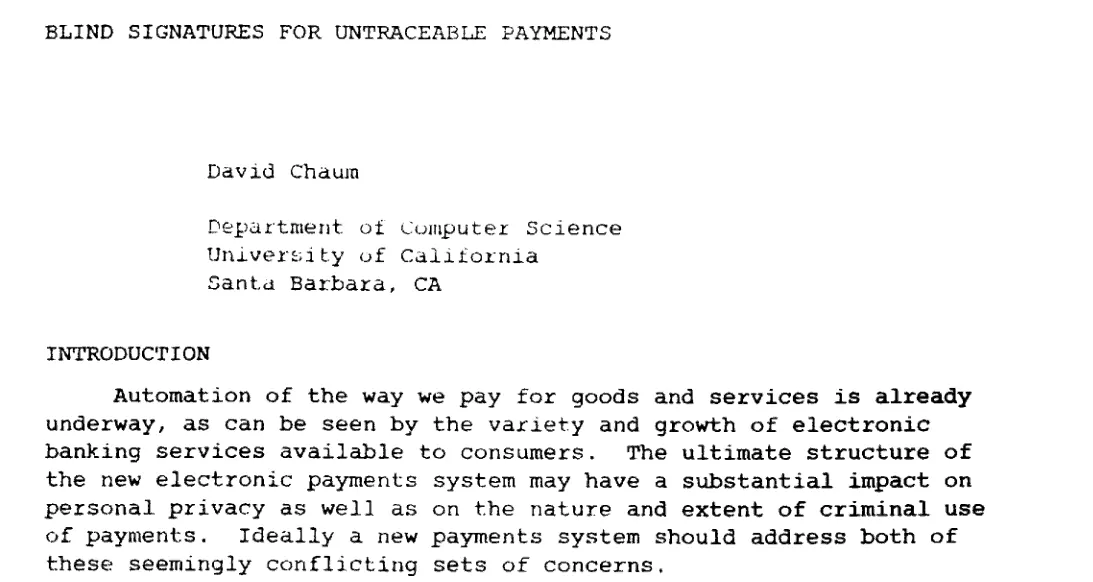
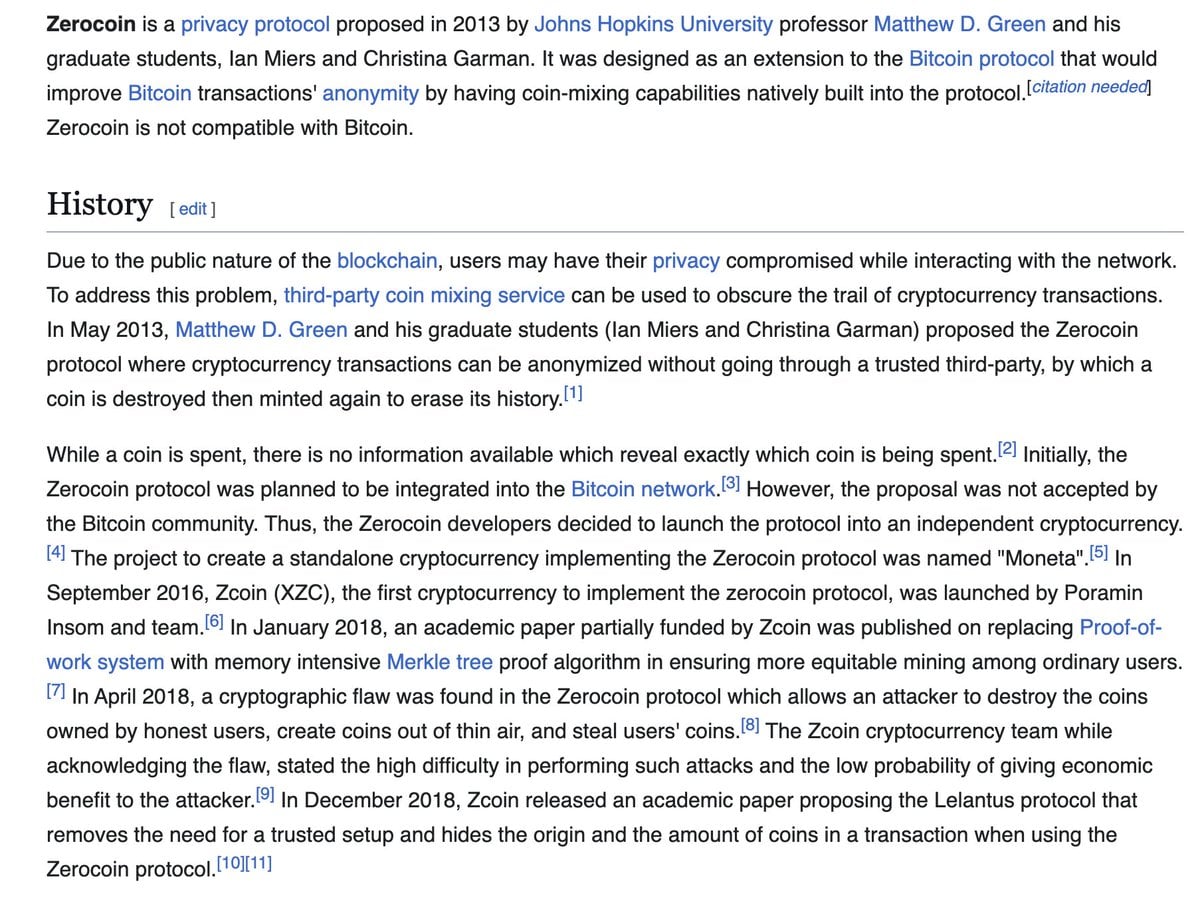
No. Earlier digital-cash research, including David Chaum’s 1982 work on blind signatures, explored payment privacy but retained a central issuer. Later Zerocoin and Zerocash research explored ways to verify transactions while concealing more of their details. The source describes Monero’s privacy features and Zcash’s shielded transactions as approaches that hide information Bitcoin’s base ledger exposes. Zcash also supports transparent addresses, so the protection depends on how it is used.
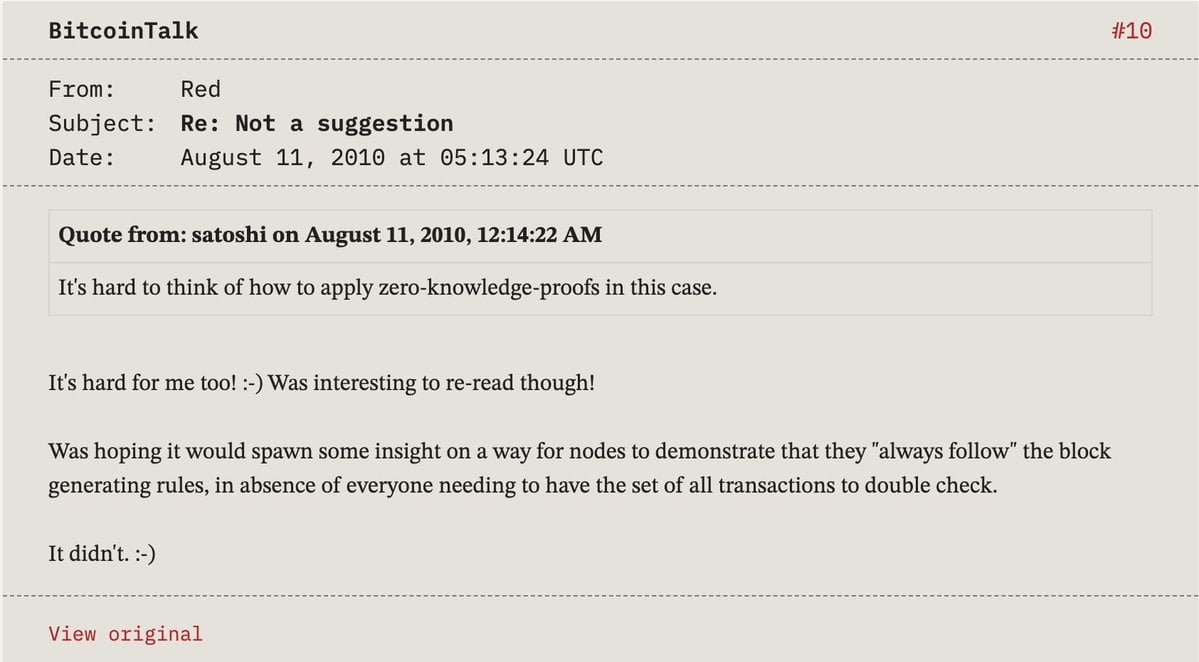
Privacy has boundaries beyond the ledger. Wallet queries to remote services can disclose which addresses a user is checking, and network activity or other outside information can weaken protections even when transaction details are concealed.
Bitcoin’s public record makes independent verification possible, but a name-free address should not be mistaken for a private payment. The useful question for any privacy tool is narrower: which information does it hide, from whom, and what remains visible?
Source: techflowpost.com (originally published 2026-11-16 09:29 UTC+8)